



.jpg.ce29de0218618d800a7be97b2fae0c65.jpg)

Admin
Administrators
-
Joined
-
Last visited
Everything posted by Admin
-
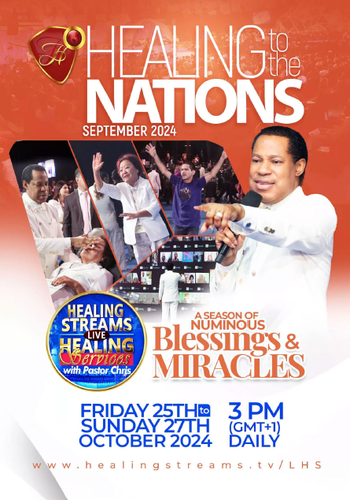 Pastor Chris: Healing the Nations Magazine - September 2024
 -
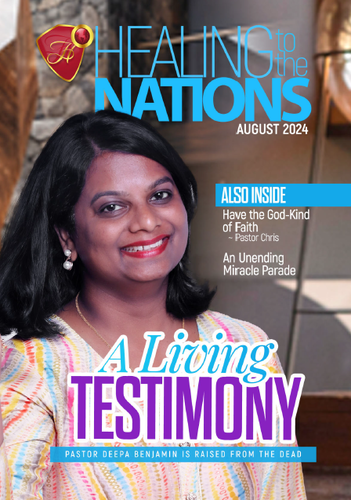 Pastor Chris: Healing the Nations Magazine - August 2024
 -
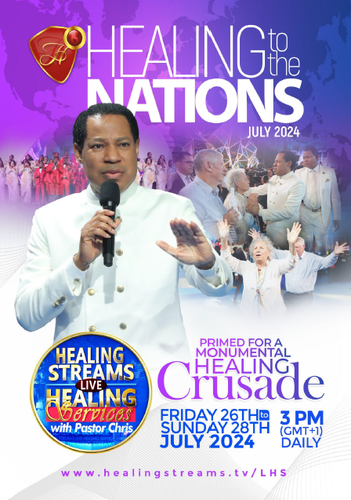 Pastor Chris: Healing the Nations Magazine - July 2024
 -
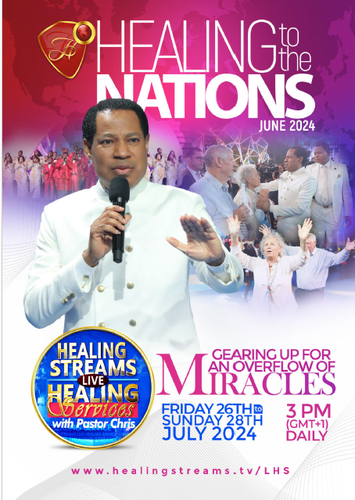 Pastor Chris: Healing the Nations Magazine - June 2024
 -
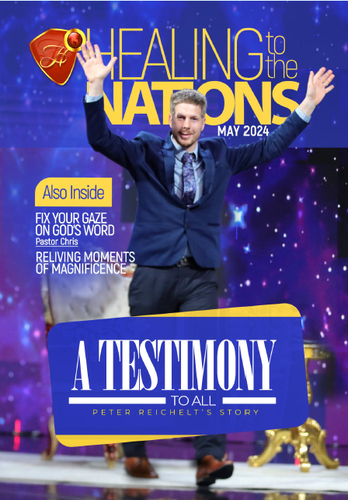 Pastor Chris: Healing the Nations Magazine - May 2024
 -
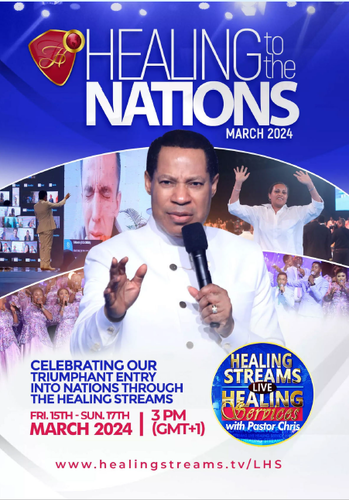 Pastor Chris: Healing the Nations Magazine - March 2024
 -
1. The rapture of the church. Christ comes in the clouds to “snatch away” all those who trust in Him (1 Corinthians 15:52). At this same time, the “dead in Christ” will be resurrected and taken to heaven, too. From our perspective today, this is the next event in the eschatological timeline. The rapture is imminent; no other biblical prophecy needs to be fulfilled before the rapture happens. 2. The rise of the Antichrist. After the church is taken out of the way (2 Thessalonians 2:7–8), a satanically empowered man will gain worldwide control with promises of peace (Revelation 13:1; Daniel 9:27). He will be aided by another man, called the false prophet, who heads up a religious system that requires worship of the Antichrist (Revelation 19:20). 3. The tribulation. A period of seven years in which God’s judgment is poured out on sinful humanity (Revelation 6–16). The Antichrist’s rise to power is associated with this time period. During the tribulation on earth, the Church will be in heaven. It is thought that at this time the Judgment Seat of Christ and the Marriage Supper of the Lamb will occur in heaven (2 Corinthians 5:10; Revelation 19:6–10). 4. The Battle of Gog and Magog. In the first part of the tribulation, a great army from the north, in alliance with several other countries from the Middle East and Africa, attacks Israel and is defeated by God’s supernatural intervention (Ezekiel 38–39). (Some commentators place this battle just before the start of the tribulation.) 5. The abomination of desolation. At the midway point of the seven-year tribulation, the Antichrist breaks his covenant with Israel and shows his true colors. The Jews are scattered, and many of them turn to the Lord, realizing that Jesus is their Savior. A great persecution breaks out against all those who believe in Christ (Daniel 12:11; Mark 13:14; Revelation 12:17). 6. The Battle of Armageddon. At the end of the tribulation, Jesus returns with the armies of heaven (Mark 14:62). He saves Jerusalem from annihilation and defeats the armies of the nations fighting under the banner of the Antichrist (Revelation 19:11–21). The Antichrist and the false prophet are captured and thrown alive into the lake of fire (Revelation 19:20). 7. The judgment of the nations. Christ will judge the survivors of the tribulation, separating the righteous from the wicked as “sheep” and “goats” (Matthew 25:31–46). (It is thought that at this time the Old Testament saints will be raised from the dead.) The righteous will enter the Millennial Kingdom; the wicked will be cast into hell. 8. The binding of Satan. Satan will be bound and held in a bottomless pit for the next 1,000 years (Revelation 20:1–3). 9. The Millennial Kingdom. Jesus Himself will rule the world, and Jerusalem will be the capital. This will be a 1,000-year period of peace and prosperity on earth (Revelation 20; Isaiah 60–62). Memorial sacrifices will be offered in a rebuilt temple in Jerusalem (Ezekiel 40–48). 10. The last battle. At the end of the 1,000 years, Satan will be released from his prison for a short time. He will deceive the nations once again, and there will be a rebellion against the Lord that will be quickly defeated (Revelation 20:7–10). Satan will be cast into the lake of fire, never to reappear. 11. The Great White Throne Judgment. All those in hell will be brought forth, and all the wicked from all eras of history will be resurrected to stand before God in a final judgment (Revelation 20:11–15). The verdicts are read, and all of sinful humanity is cast into the lake of fire. 12. The new creation. God completely remakes the heavens and the earth. It is at this time that God wipes away all tears and there will be no more pain, death, or sorrow. The New Jerusalem descends from heaven, and the children of God will enjoy eternity with Him (Revelation 21–22).
.jpg.a3ba28c7239432c84e52ea70afbf88ef.jpg)
-
James O’Keefe: Charlie Kirk Was the Greatest Man I’ve Ever KnownCharlie Kirk Staff Investigative journalist James O’Keefe delivered a deeply personal tribute to Charlie Kirk, calling him “the greatest man I’ve ever personally known.” O’Keefe reflected on their friendship, Kirk’s faith and consistency, and the movement he built from scratch into a national force. O’Keefe recounted their first meeting in a Chicago diner in 2012, when Kirk was just 18 years old with “ambitious, grandiose, and seemingly improbable” plans to create a mass youth movement. Over the years, O’Keefe said, Kirk became not only a political leader but a moral and spiritual guide who helped him through his darkest times, even providing financial support when O’Keefe was struggling to rebuild. JAMES O’KEEFE: Charlie Kirk’s death is a dark moment for America per President Trump. It’s also a turning point for you and me, a call to action and a time for choosing. First let me tell you about my relationship with Charlie. Charlie was the greatest man I’ve ever personally known. He was a moral, kind, generous and irreplaceable man. Charlie was Turning Point USA, the organization he founded. We are sad today, because he represented the best of America and what we as men aspire to be. What set him apart was that he was the least hypocritical man I’ve ever known. He practiced what he preached in his professional and personal life like no other. Now, as for what he built, I would often watch him work and utter to myself, he’s a force of nature. He was a modern-day William F. Buckley Jr. meets Rush Limbaugh meets community organizer, and it hurts to see him gone from this earth after all that was seemingly planned for him. Many of us know he would have one day been President. As Kierkegaard once said, “The most painful state of being is remembering the future, particularly the one that you’ll never have.” For those of you who have never met Charlie Kirk, this feels like a death in the family. But for those of us who did know him, and thousands of us were his friends, that says a lot about his character. By the way, we’re heartbroken and grieving with a depth we’ve never before experienced in our lives. I first met him in a Chicago diner in 2012 when he was 18, and I was 27. He was persistent in reaching out to me, looking to obtain a meeting, to receive guidance and advice on what he set out to build. He spoke confidently at this diner about his plans to build a mass movement of young people. I remember thinking at the time just how ambitious, grandiose and seemingly improbable all these plans seemed, even for this precocious kid. But it was a world-changing idea. Yet few people actually had the X factor that Charlie Kirk had. That was actually something that one of my previous board members, Jim Young, said — many people recognized that in him. Sitting across from me was this teenager with a half-eaten sandwich, speaking with the quiet conviction of Martin Luther: “Here I stand. I can do no other.” I saw him shortly thereafter, living on a couch at Lee Handel’s house on Palm Beach Island. Lee was a donor I was soliciting for money on that day. Charlie was running around the country, sleeping on couches, starting this organization out of his parents’ place in Chicago. He was indefatigable, relentless, executing his vision. I vividly recall Rush Limbaugh saying, “Everywhere I go, I run into Charlie Kirk.” He said that at the time, while at Mar-a-Lago. A decade later, Charlie built his mass movement. But the irony was, it was now me, 10 years his senior, asking him for advice. I had to start all over. I was in the rebuilding phase, and he was on the phone with me, coaching me through my darkest days. I remember pulling over to the side of the road on the highway, pacing through the grass next to the overpass as we had profound conversations about the difference between knowledge and wisdom, as he tried to help me find God in the face of unimaginable evil and betrayal. And I’ll never forget the question he asked me on the phone that day. He said, “Do you love yourself, James?” He made me be a better person. Then shortly after that, in San Diego in September of 2023 at the Turning Point Faith Conference, he summoned me on stage. This was not planned. On stage with Pastor Rob McCoy, he asked the entire convention center of 1,200 pastors to pray for me. Charlie put his hands on my shoulder and said, “I want us to pray for James O’Keefe and show him some encouragement during the difficult time he’s going through.” But it wasn’t just spiritual advice. Charlie prayed as if it depended on God. He acted as if it depended on him. For example, he helped me make payroll one month that year, 2023, when I was rebuilding the company. That was an act that moved even the nonbelievers on our staff. Many others who knew him have many similar stories like this. I looked up to him and deeply admired him. He was a role model of what a man ought to be — a better man than we, a model of civility and heroism in an age where those things have been under constant attack.
-
ERIKA KIRK’S BATTLECRY: Charlie’s Mission Will Continue. We Will Never SurrenderCharlie Kirk Staff Mrs. Erika Kirk addressed the world on Friday night in an inspiring and heart-wrenching speech that paid tribute to her martyred husband Charlie. Speaking from a podium next to his empty chair in his broadcast studio, she honored him, spoke of her love, affirmed their shared faith in Jesus Christ, and promised to carry on his work with Turning Point USA The mission continues. For Charlie. Mrs. Kirk’s words went beyond simple gratitude for those who cared for her husband and those he cherished. They rang out as a rallying call—for the movement he built, for the country, and for the wider world. Mrs. Kirk’s Full Speech: Good evening. My name is Erika Kirk. Charlie Kirk is my husband. I first want to thank the local, state, and federal law enforce enforcement who worked tirelessly to capture my husband’s assassin so that he can be brought to justice. I want to thank the first responders who struggled heroically heroically to save Charlie’s life. and the police who acted bravely to make sure that there were no other victims on that terrible afternoon. I want to thank the officers who have protected our Turning Point USA family these past two days. And I want to thank the Turning Point USA board, the COO, Justin Strife, and my husband’s chief of staff, the amazing Mikey McCoy, for all their work in these terrible days to be the stability for our family and for the wider Turning Point USA family as well. My heart is with every one of my husband’s employees who lost a friend and a mentor. I want to thank the staffers of this his amazing Charlie Kirk show who helped him broadcast from this studio, this this chair every day. He loved it. He loved what he did. I want to thank the millions of people who have shown their love for Charlie here in Phoenix, across America, and worldwide. I want to thank my husband’s dear friend, Vice President Vance, and his phenomenal wife, Usha, for their love and support. You guys honored my husband so well bringing him home. You both are tremendous. I want to thank President Trump and his incredible family for the same. Mr. president. My husband loved you. And he knew that you loved him, too. He did. Your friendship was amazing. You supported him so well, as did he for you. Two days ago, my husband Charlie went to see the face of his savior and his God. Charlie always said that when he was gone, he he wanted to be remembered for his courage and for his faith. And one of the final conversations that he had on this earth, my husband witnessed for his Lord and Savior, Jesus Christ. Now and for all eternity, he will stand at his savior’s side wearing the glorious crown of a martyr. Charlie loved loved life. He loved his life. He loved America. He loved nature, which helped him always bring him closer to God. He loved the Chicago Cubs. And my goodness, did he love the Oregon Ducks. He would want me to say, “Go Ducks.” So, I have to, since they play on Saturday. So, go Ducks. But most of all, Charlie loved his children and he loved me with all of his heart. And I knew that every day I knew that he made sure. I knew that every day. Every day he would ask me, “How can I serve you better? How can I be a better husband? How can I be a better father?” Every day. Every day. Such a good man. He still is a good man. He was the perfect father. He was the perfect husband. Charlie always believed that God’s design for marriage in the family was absolutely amazing. And it is. It is. And it was the greatest joy of his life. And over and over he would tell all these young people to come and and find their future spouse, become wives and husbands and parents. And the reason why is because he wanted you all to experience what he had and still has. He wanted everyone to bring heaven into this earth through love and joy that comes from raising a family. It’s beautiful. Charlie always said that if he ever ran for office, I know a lot of you asked if he ever was going to, but privately he told me if he ever did run for office that his top priority would be to revive the American family. That was his priority. One of Charlie’s favorite Bible verses was Ephesians 5 verse 25. “Husbands, love your wives as Christ loved the church and gave himself up for her.” My husband laid down his life for me, for our nation, for our children. He showed the ultimate and true covenantal love. I will never ever have the words to describe the loss that I feel in my heart. I honestly have no idea what any of this means. I know that God does, but I don’t. But Charlie, baby, I know you do, too. I know you do. So does our Lord. And our world is filled with evil. But our God, you guys, our God is so good. So incredibly good. And we know that for those who love God, all things work together for good for those who are called according to his purpose. Already, I have seen the worldwide outpouring of love for my husband. I’ve heard the testimonies from people my husband inspired to get married, to start families, to seek out a relationship with God. It’s the most important one of all. The evildoers responsible for my husband’s assassination have no idea what they have done. They killed Charlie because he preached a message of patriotism, faith, and of God’s merciful love. But they should all know this. If you thought that my husband’s mission was powerful before, you have no idea. You have no idea what you just have unleashed across this entire country, in this world. You have no idea. You have no idea the fire that you have ignited within this wife. The cries of this widow will echo around the world like a battlecry. To everyone listening tonight across America, the movement my husband built will not die. It won’t. I refuse to let that happen. It will not die. All of us will refuse to let that happen. No one will ever forget my husband’s name. And I will make sure of it. It will become stronger, bolder, louder, and greater than ever. My husband’s mission will not end, not even for a moment. And one of Charlie’s greatest talents was his ability, this phenomenal ability to choose great people to follow him. He could always find the ones who could handle any setback. And it’s almost like he knew. He just he could see it in you. Even when you couldn’t see it in yourself, he just knew. He knew you could handle it. You thought you only had 5% left. And he knew you had 15. He knew you were ready to go that extra mile even when you didn’t. He always challenged people around him to work harder and to be better. He never gave up. And I love knowing that one of his one of his mottos was never surrender. So I want to tell you that that we’ll never surrender. We never will ever ever. Our campus tour this fall will continue. There will be even more tours in the years to come. America Fest here in Phoenix this December will go on. It will be greater than ever. The radio and podcast show that he was so proud of will go on. And in a world filled with chaos, doubt, and uncertainty, my husband’s voice will remain. And it will ring out louder and more clearly than ever. and his wisdom will endure. My favorite too, but my husband’s favorite word in the English language was “earn.” He would call all of you to be people of action who earn the future America deserves. So, to all of the young people who felt inspired by my husband’s faith in hard work, all of you already know what Charlie would want you to do. You know, you know, if you’re in high school or if you’re in college, go find your local Turning Point USA chapter. Join it. Stay involved. He wants you to make a difference. And you can. You can. The movement’s not going anywhere. And it will only grow stronger when you join it. If there isn’t a chapter, you can’t find one. Then start one. There is no excuse. You can start one. And as my husband used to say in this room every single day, if you want to get involved, the best way you can do that is going to tpusa.com. That’s what he would say every day from this chair. every single day. I watched his show every day and he would always say, “If you want to get involved, go to tpusa.com.” If you’re a pastor, join our movement at TPUSA Faith. And if you’re a parent, I highly recommend that you come to America Fest in December. Sign up right now for that because we would love to see you. I would love to see you. Charlie would. He’ll be there. He’ll be there in spirit. Bring your kids. Bring your family. But most important of all, if you aren’t a member of a church, I beg you to join one. Our battle is not simply a political one. Above all, it is spiritual. It is spiritual. The spiritual warfare is palpable. Charlie loved his savior with all of his heart. And he wanted every one of you to know him, too. He wanted everyone to know that if they confess, if they confess the Lord Jesus Christ who rose from the dead, then they will be saved. Hear me when I say this: nobody is ever too young to know the gospel. Nobody … nobody is ever too young to get involved with saving this beautiful country. This country my husband loved and still loves. And nobody is ever too old either. There’s no age limit. I know my husband is still here. He’s watching over us. I don’t remember the last time I slept. And I couldn’t sleep last night. And Charlie, baby, Charlie, I promise I will never let your legacy die, baby. I won’t. I promise I’ll make Turning Point USA the biggest thing that this nation has ever seen. I promise. Charlie, I love you. I love you, baby. Rest in the arms of our Lord as he blankets you with the words I know your heart always strived to hear “Well done, my good and faithful servant.” When I got home last night, Gigi, our daughter just ran into our my arms. And I talked to her and she said, “Mommy, I missed you.” I said, “I miss you, too, baby.” She goes, “Where’s Daddy?” What do you tell a three-year-old? She’s three. I said, “Baby, Daddy loves you so much. Don’t you worry. He’s on a … he’s on a work trip with Jesus, so he can afford your blueberry budget.” And my goodness, am I so humbled to witness Charlie, you alongside Jesus right now doing what you always want to do, baby. Making heaven crowded, right? That’s what it’s all about. Making heaven crowded. I can’t wait to see you again one day. Thank you all again who love my husband, who supported him, who wrote him an email every single day during his radio show. He read all of them. All of them. God bless you all and may God bless America.
-
Testimony from Isaac Original Post from YouTube.
-
We came here to reveal God’s word to you—so you can take hold of it, carry it, and use it for your life. Use it to change your home, your family, your job, your finances, your health. The message—the word—has been delivered to you. Take it. That’s where the power is. Take it with you, apply it, and keep applying it. When a farmer sows a seed and the crop isn’t good one season, he doesn’t say, “I’ll never sow again.” No—next season he sows more and seeks wise counsel. He doesn’t blame the flood or the lack of rain and quit. God gave the law; it didn’t perfect anyone. He sent the prophets; still, it didn’t produce the needed result. Then He offered His own Son—not merely to preach, but to die as a sacrifice—and the problem of sin was broken. He offered His best, that which was connected to Him, and sin lost its dominion. With the prophets, sin had dominion; with the law, sin had dominion; but Christ brought in a better hope. Consider 2 Kings 3. We are at the closing moments of our convention, so take this seriously. Mesha, king of Moab, knew the power of covenants through his connection to God’s people. Three nations—Israel among them—aligned against Moab and said, “Let us invade and destroy Moab and take the people as bondmen.” They sought God: “Will You deliver Moab into our hands?” God answered, “Yes.” Moab had been strong, but this battle was too strong for them because God was with Israel and her allies. They pounded Moab, bringing it to nothing. When the king of Moab saw the battle was too strong, he took 700 sword-men to break through the line of Edom, thinking it the easiest route—but they could not. You may have put forth your greatest effort and it hasn’t worked. You may have gone to your most powerful friends, and they couldn’t help. Promises were made, but nothing changed. That’s where Mesha was. When his strongest effort failed, did he go home? No. With death facing his nation and a generation about to be enslaved, he took his eldest son—who would have reigned in his stead—and offered him as a burnt offering on the wall. This is a hard story, and God does not ask us for human sacrifice. But see the principle: a decisive, ultimate sacrifice shifted the battle. There was great indignation against Israel; they withdrew and returned to their own land. The tide turned because sacrifice carries authority. God respects authority, and your authority is in your sacrifice. Many believers pray, fast, and receive a promise—and yet still lose out. Why? Often the missing piece is sacrificial obedience. Some live with “hopeless hope”—“I know my Redeemer will do it”—but nothing changes because they refuse the life of a giver. A true Christian is a giver. During worship, don’t treat giving as a formality. Don’t rummage for “church change.” Take a definite, meaningful offering and present it to God. Live as a man or woman of prosperity in Christ—by practicing generosity. Remember Barnabas in Acts 4. The early church had great grace; none lacked. People sold houses and lands, laid the proceeds at the apostles’ feet, and distribution was made as needed. Joseph, surnamed Barnabas—“son of consolation”—sold a field and laid the money at the apostles’ feet. Others gave, yes, but his gift was of a different order; it consoled and empowered the work so the church could advance to other cities. God is looking for sons and daughters of consolation—people whose giving strengthens the mission, calms anxieties, and opens new territories. Some used to give boldly but drew back, thinking, “Am I the only one?” They hindered themselves by complaining and calculating. Yet heaven still watches. The apostles and saints—the great cloud of witnesses—observe our race. They still recognize and “name” sons of consolation today when they see them. Scripture teaches: “Let each one give as he has purposed in his heart, not reluctantly or under compulsion, for God loves a cheerful giver.” God takes pleasure in, prizes, and will not do without the joyful, prompt-to-do-it giver whose heart is in the giving. That’s why the Spirit keeps coming back to such people with assignments. Don’t resist Him. If He keeps stirring you to meet needs, it’s because He has marked you for this grace. I’ve seen it: people who let the Spirit lead their giving rise quickly—sometimes selling what they can, moving from smaller to larger faith steps. They start with little, but as they sow, they grow. A 20,000 giver becomes a 1,000,000 giver. Faith doesn’t slice offerings into tiny, safe pieces; it obeys promptly. Testimonies follow—promotions, contracts, expansion—because God multiplies seed sown. Don’t make a spectacle of token giving that discourages others; when you approach the altar, bring what matters to you. This is a prosperity convention—let your “amen” be expressed with obedience, not noise alone. Keep pressing; there’s more in God. As needs arise in the house of God—media outreach, missions, helps—the Spirit will look for sons and daughters of consolation who can be trusted to respond. Start where you are, grow quickly, and keep your heart right. Again, this is not about manipulating anyone or collecting money; it’s about delivering you from what holds you back, teaching you to worship God in spirit and truth, living beyond formality. When you align your life with the Word—prayer, faith, and sacrificial generosity—you step into the better hope Christ brought. God remembers your offerings. At the right moment, favor turns the tide. May God increase in this place the sons and daughters of consolation. May He locate you, raise you, and show you the blessing of such a calling. Lift your hands; talk to Him yourself now.
-
You can be guided by the Holy Spirit 24/7. Here are five steps to help you learn how to walk in the spirit.What’s the first thing you think of when you wake up in the morning? A cup of coffee? How comfortable your bed is? Your list of things to do? Every decision and step we take each day is driven by something—a growling stomach, a sense of responsibility, a desire for success. Your day is determined by one of two driving forces—your flesh or your spirit. What’s the default setting and the natural thing to do? To let the flesh control you. The flesh is loud and demanding. It likes to have its own way, and it sure doesn’t give up easily. It may not seem like it, but you have control over what controls you. You aren’t meant to let your flesh rule your life—you’re meant to walk in the spirit and live on a higher level, where victory reigns and righteousness rules. You can walk in the spirit and be guided by the Holy Spirit 24/7. Do you want to know how to walk in the spirit? You can do it! The Spirit of God is in you right now. You may not feel like it, but He is there—speaking to you, directing you to freedom and blessing. God wants you to operate in the realm of the spirit—not in this natural world—because that’s how you live the life you’ve always dreamed of. That’s how you claim victory—by walking in the spirit. If you’re feeling discouraged and defeated—there is a better quality of life available to you when you walk in the spirit, but it won’t happen overnight. It is a transformation from one degree of glory to another and one move of obedience to another. To begin enjoying the blessings of a Spirit-led life, here are five steps to help you learn how to walk in the spirit. Step No. 1: Walk in the Spirit by Throwing Off Hindrances“Therefore, since we are surrounded by such a great cloud of witnesses, let us throw off everything that hinders and the sin that so easily entangles. And let us run with perseverance the race marked out for us.” –Hebrews 12:1, NIVNotice this verse doesn’t say anything about gently removing things one at a time. No! It says to throw them off. If you’ve ever seen someone who has come in contact with fire ants or bees, you know they don’t stop and consider whether they should remove them, and they certainly don’t do so slowly. They make a vigorous and determined effort to get those pests away from them. Why? Because they know the damage and pain that could be inflicted if left unaddressed. So, don’t sit around wondering if you should stop sinning or cast the devil out of your life—get rid of it! You weren’t created to be a slave to anything. What is a hindrance? Anything that is out of line with the Word of God is a hindrance. That’s why Satan is so determined to strap hindrances onto your spirit. He wants to slow you down and keep you from reaching THE BLESSING. Hindrances can include any of the following: Sexual vice, impurity, unholy desires, greed Anger, rage, bad feelings toward others, cursing, slander, foul-mouth abuse and shameful utterances Adultery, fornication, idolatry, witchcraft, hatred, strife, envy, murders, drunkenness and anything like them (Colossians 3:5-6; Galatians 5:19). How can you throw off hindrances? “We do this by keeping our eyes on Jesus.” –Hebrews 12:2 To get rid of those things that are slowing you down, and to walk in the spirit, the natural world has to become small in your heart and mind, while the things of God become bigger and bigger. If you have a sin habit in your life—something you know isn’t pleasing to God—now is the time to rid your life of it as fast as you would get away from fire ants and bees. Maybe there are some things you watch on television you shouldn’t be watching. Things that deplete your spirit. There are times when you just need to say “no” out loud when something is displeasing to the Father. Even shout it out if you need to. Say, “No, I do not receive that. I cast down every high imagination that tries to exalt itself against God.” Allow the Holy Spirit to correct and guide you as you work toward walking in the spirit every day. He will help you not only to separate yourself from the world, but to desire the things of God more than anything else. Step No. 2: Walk in the Spirit by Sowing to the Spirit“He who sows to the Spirit will of the Spirit reap everlasting life.” –Galatians 6:8, NKJVThe New Testament in Modern English by J. B. Phillips says, “A man’s harvest in life will depend entirely on what he sows.” This means, if you want to walk in the spirit, you can’t sow your time to the world. You’ve got to sow to the spirit to reap the harvest of a blessed and fulfilled life—lacking nothing. How do you sow to the spirit? With your time. Many Christians don’t grow because they don’t get the Word into themselves. If you don’t give God time, natural voices will overwhelm His Spirit in your life. Sure, you have things you need to do in the natural—but they shouldn’t take up all your time. Give your spirit the opportunity to feed on the Word of God, fellowship with Him, and build yourself up in faith. It doesn’t take a lot of time. Kenneth E. Hagin once prophesied the importance of giving the Lord a tithe of your time—just an hour or two each day. You might say, I don’t have an hour! But the truth is—you’ll make time for anything if it’s important enough. There are no shortcuts to the good life. When you sow to the spirit, it will take you into a realm where you’ve never been before. In fact, when you get to a place where the truth of God’s Word is so real, the Spirit of God will rise up on the inside of you and you’ll do things you never would have done before. Step No. 3: Walk in the Spirit by Presenting Your Body as a Living Sacrifice“Present your bodies a living sacrifice, holy, acceptable to God, which is your reasonable service. And do not be conformed to this world, but be transformed by the renewing of your mind, that you may prove what is that good and acceptable and perfect will of God.”—Romans 12:1-2, NKJVAt first, that sounds like a big commitment. It is! But that’s what Jesus did for us—He presented His body a living sacrifice. But what does this really mean for us? How do we present our body as a living sacrifice to God? Lay aside the things of the world. This means being willing to give up activities, friends or habits that don’t match God’s best for our lives—walking away from anything that is not pleasing to the Lord. For more on guarding your heart from the world, find it here. Obey righteousness, not the flesh. The reason people get so good at sin is because they practice it. For example, a person doesn’t become an alcoholic the first time he takes a drink. He had to practice drinking until the flesh was trained to demand it. To become good at obeying the Holy Spirit, we must practice. Make a daily decision. You make a decision to put on the Spirit each day the same way you would put on a coat. Pastor George Pearsons presents himself to the Lord as a living sacrifice, according to Romans 12:1, by speaking the following declaration first thing every morning: Father, I present my body to You as a living sacrifice, holy and acceptable to You, for this is my reasonable service—my divine worship for You. I command my body to submit to my spirit. Father, according to Hebrews 12:1-2, I lay aside every weight and the sin that so easily entangles me so that I may run with patience the race that is set before me, looking unto Jesus, who is the Author and Finisher of my faith. In Jesus’ Name, I am taking command of my body. Body, mind, you can’t tell me what to do or think. Spirit man, you’re in charge. Body and mind, you submit to the spirit. As you continue to present yourself to the Lord, it may take some time for things to straighten out, but if you’re willing to be obedient, it won’t take long. It would be backward for us to say we’ll get things right in our lives first, and then walk in the spirit. As we obey the Holy Spirit’s leading first, the other things in our life will straighten out. Step No. 4: Walk in the Spirit by Praying in the Spirit Daily“For we do not know what prayer to offer nor how to offer it worthily as we ought, but the Spirit Himself goes to meet our supplication and pleads in our behalf with unspeakable yearnings and groanings too deep for utterance.” –Romans 8:26, AMPCThe most powerful way to begin walking in the spirit is to start praying in the spirit—it is the gateway to living life above what you have ever known. Praying in the spirit accomplishes so much all at once. It charges and strengthens your spirit. It enables you to overcome the weakness of the flesh—any bad habits. It makes it easier to receive from God and keep what you have received. It strengthens your ability to resist the devil. It causes your inner man to rise up in adversity. It reveals things to your spirit you could never know by your own ability. Step No. 5: Walk in the Spirit by Obeying the Promptings of the Holy Spirit“The sheep follow him, for they know his voice.” –John 10:4, ESVThe Holy Spirit is ALWAYS speaking to you. There’s an answer to every problem you’re facing today—whether financial, health or family related. The worst problem in your marriage, health or finances is only one word from the Lord away from a complete turnaround. How can you access these answers? Through heeding the voice of the Holy Spirit. The question is: How far do you want to go in your walk with God? So many times, people will say I’d go to Africa or China if God asked me to, yet they won’t obey Him in the small things. They won’t forgive someone; they won’t stop watching ungodly television programming; they won’t spend time with Him daily. That’s what happened to Peter. He told Jesus, “I’d die for You,” yet when Jesus simply asked him to watch and pray with Him one hour, he fell asleep. Everything God tells you to do is important. So, tune in to the Spirit of the Lord in all things, even when He’s telling you something that seems small, or something you don’t want to hear. Confess this every day: “I hear the voice of the Good Shepherd, and a stranger’s voice I will not follow” (John 10:5). When you obey the promptings of the Holy Spirit, you will be in the right place at the right time, doing the right thing with the right people. And you will have success and victory in everything you do. When you take these five steps toward walking in the spirit, there will be no limit to what you can achieve. You will stop letting your flesh control you and begin living a Spirit-led life of peace, joy and blessing beyond anything you’ve ever hoped or imagined. You will live the God kind of life right here on earth! Original Post: https://blog.kcm.org/how-to-walk-in-the-spirit/
-
until
Prophet Prempeh Ministries “ International Gathering of Prophets” with Prophet A.A Prempeh & Prophet Isaac Owusu Bempeh is just 6 DAYS MORE to go. The event will take place on Friday, September 12th - Sunday, September 14th at the “Double Tree by Hilton Newark Airport, 128 Frontage Rd. Newark, NJ 07114." This event promises to be filled with many prophetic teachings, deliverances and many unveiled mysteries straight from the realms of the spirit. Kindly share the flyer with EVERYONE you know and we hope to see you there. Please register by clicking the link below; registration is strictly for headcount purposes ONLY — the event is FREE. REGISTER USING THE LINK BELOW: https://www.eventbrite.com/e/international-gathering-of-prophets-tickets-1308626239309?aff=oddtdtcreator BOOK YOUR ACCOMMODATIONS: https://www.hilton.com/en/book/reservation/rooms/?ctyhocn=EWRNADT&arrivalDate=2025-09-12&departureDate=2025-09-14&groupCode=XPR&room1NumAdults=1 If you have any questions, please contact us at info@prophetprempeh.org or +1-609-933-2401. Sincerely, Prophet Prempeh Ministries -
Who Was Judas Iscariot? So, everyone knows (or should know) that Judas Iscariot was one of the Twelve Apostles. He is notorious for betraying Jesus by disclosing Jesus' whereabouts for 30 pieces of silver. Judas brought men to arrest Jesus and identified him with a kiss. Jesus was then arrested, tried, and executed. Afterwards, threw down the pieces of silver in the sanctuary, and departed. He went away and hanged himself. (Matthew 27:5) In the Book of Acts, the Disciples got together to draw straws to see who would replace Judas Iscariot: Wherefore of these men which have companied with us all the time that the Lord Jesus went in and out among us, Beginning from the baptism of John, unto that same day that he was taken up from us, must one be ordained to be a witness with us of his resurrection. And they appointed two, Joseph called Barsabas, who was surnamed Justus, and Matthias. And they prayed, and said, Thou, Lord, which knowest the hearts of all men, shew whether of these two thou hast chosen, That he may take part of this ministry and apostleship, from which Judas by transgression fell, that he might go to his own place. And they gave forth their lots; and the lot fell upon Matthias; and he was numbered with the eleven apostles. (Acts 1:21-26) Ok, here’s a quick detour: If you notice, you never hear anything more about Matthias that was selected to be the replacement Apostle for Judas. You see, the disciples tried on their own to replace Judas by casting lots. However, Jesus selected his own Apostles. (Have I not chosen you twelve, and one of you is a devil? – John 6:70) Later, we see that Jesus selected Saul, later to be the Apostle Paul. Ok, back to Judas. “…that he might go to his own place.”v.25 1. This is the expression used for Laban and Absalom (Genesis 31:55; 2 Samuel 18:18) Absalom is one of the greatest types of Antichrist in either Testament (2 Sam. 15:1-6). Jacob returning from Laban is a picture of A.D. 1948-1978 2. Judas was a devil (John 6:70-71), and his title was “the son of perdition” (John 17:12). The “son of perdition” goes to perdition (Revelation 17:8) because it is “HIS OWN PLACE” (Rev. 9:11) 3. It is not just “his” in the sense of “fitting, congenial,” or “adapted to.” Judas owned the place. He was king over it (Rev. 9:11). When Peter says “his OWN place,” he is putting it out just as hard and straight as he did in Matthew 16:22 or John 13:8, and don’t you doubt it for a minute. Judas is in the pit now (Rev. 9:11), and his spirit will come up from that pit (Rev. 17:8) as Satan comes down to enter the body of the second most prominent character in the Bible: the Son of Perdition.
-
In the Bible, the main purpose of sex is unification; ‘two shall be one flesh’ as you have seen in the main purpose of sex. Then how does unification happen in sex for two to become one flesh? Unification in SexIf you mix a glass of red juice with a glass of yellow juice you get an orange juice (a mixture). Sex is like mixing two glasses of juices each with a juice of a different color resulting to a mixer of both juices; a juice of another different color. And this is how two become one flesh in sex. How two become one fleshHumans are created in the image and likeness of God. Gen 1:26: And God said, Let us make man in our image, after our likeness. God is a trinity, see the Holy Trinity, and hence man is a trinity. See the moving hand untouched to body touching me. Humans have a body, a soul and a spirit. The body is the material, the physical, the outer person. The soul is the nonphysical aspect of a person: the complex of human attributes that manifests as consciousness, thought, feeling, and will, regarded as distinct from the physical body. The mind, emotions, thoughts all contribute to the soul. The spirit is the life force of a person: the vital force that characterizes a human being as being alive. This is the inner being of a person. In sex, the 3 forms of man are unified; becomes one. How? 1. Body In sex, first the sex organs unite. Also the bodies unite by mixing their fluids; the same way a glass of red juice mixes with another of yellow juice to give a mixture; a orange juice. From one body to the other, fluids mix unifying the bodies of the two persons to become one flesh. Thus you find the body fluids in one person are the same body fluids in his/her sex partner. This is the reason diseases like gonorrhea, syphilis, HIV/AID’s, etc. are transmitted in sex. Much more, demons are also transmitted in sex. Many people do not understand that in sex you are unifying (mixing) your body with the other person’s and if that other person has a disease, a demon, you already have it. 2. Soul In sex, two souls unify to become one soul. It is only in sex you find two people thinking and feeling the same. Ever wondered why couples fighting or arguing before sex become happy like nothing happened after sex? This is because the two in sex have unified their souls (feelings, thinking, emotions, will, etc.) to be in the same wavelength; same level. Two people with one soul are referred to as soul mates. Soul mates because they have mated, mixed or unified their souls to form one soul and this is what happens in sex. 3. Spirit In sex, humans unify their spirits. A person’s spirit is either connected to God’s spirit (Holy Spirit) or to Satan’s spirit (the evil spirit). Human’s spirit does not live in a void and there is nothing like being Luke-warm; neither in God’s camp nor Satan camp. You are either in one of the two. If one of the person is connecting her/his spirit with the Holy Spirit and the other person is connecting her/his spirit with the Holy Spirit, the two spirits will unify easily in sex forming one spirit. If one person’s spirit is connected with the evil spirit and the other person’s spirit too, the spirits will unify so easily in sex forming one spirit. But when one person’s spirit is connected with the Holy Spirit and the other person’s spirit is connected with the evil spirit, the two spirits will repel each other and never unify. This is why Christians must always marry fellow Christians. If you asked God for a partner and you see someone who is not a Christian coming to you, run away because that is not God’s but Satan’s. God only brings you a partner with the same spirit as you. No matter how hard two people with different spirits try to unify or click to each other, they never become one flesh. The two spirits (Holy Spirit and evil spirit) repel and fight. Reason a marriage between a Christian and non-Christian is doomed from the start and never survives except when the Christian falls or the non-Christian changes her/his heart. You can unify your bodies and souls but the spirits; if both of you have different spirits, cannot be unified thus you will never be one flesh no matter how hard you try. Reason in qualities of a perfect partner who is created and brought to you by God, you have seen that the three forms of human exactly match and you can say, ‘bone of my bones’ flesh of my flesh’. The body is the temple of the Holy Spirit; God’s dwelling place. See how God dwells in humans bodies. In sex you are unifying two temples of God to form one temple reason sex is a mystery. Sex is a Trinitarian relationship of God, self and spouse. It is supernatural and divine. World lies about sexThe world tells you that sex is just a bodily act which is a lie. Sex involves the body, the soul and the spirit. The world tells you that you are an animal thus you can have sex with every and any person which is a lie. You a created in an image and likeness of God while animals are not. See more in the moving hand untouched to a body touching me. The world tells you that you were not created by God but you evolved which is a lie. God created you. The world tells you that you can marry any person as long as you agree which is a lie. Yes! you will agree with your mouths but if you have different spirits, your relationship is doomed. When the body, the soul and the spirit unify, they form one flesh thus two become one flesh. Let’s see when two people in the eyes of God become a man and a wife. You will travel east and west but you will find very few and I say very few people teaching the truth and revealing the mysteries of God. Not even world education including theology reveals to you God mysteries but they are only found in God and God has found favor in me to understand His mysterious and reveal to His children. Mt 13:11 Because it is given unto you to know the mysteries of the kingdom of heaven. Sex is a mystery and only few people understand the mystery because it is neither learned from world education nor science but from God. God bless
-
I Laid Down My Islamic Privilege to Preach Jesus Around the WorldChristopher Alam with Peter K. Johnson How a direct descendant of Muhammad met Christ on a crowded Pakistani sidewalk. I was born in a Sunni Muslim home in Bangladesh, where I learned the meaning of stern discipline from my father, a major general in the military with responsibilities in the intelligence service. We lived on different army bases in elaborate quarters reserved for officers and their families. Servants catered to our every need. The business and political elite of Bangladesh and Pakistan frequented social events in our home. I grew up attending an Islamic madrasa (religious school), where we studied the Qur’an and learned classical Arabic from an imam. My father could trace his lineage back to the Hashemite Kingdom of Jordan (the name derives from Hashem, grandson of the prophet Muhammad’s great-grandfather). His heritage qualified me as a direct descendant of Islam’s founder. I was respected for my holy ancestry. Yet my childhood was often painful, especially after my parents divorced and my father remarried unexpectedly. I was eight years old, feeling abandoned and missing my mother. My stepmother regularly abused me mentally and physically. Screaming curses, she would hit me with a cricket wicket or dig her sharp fingernails into my ears, which caused them to bleed. Sores peppered my body. My father ignored my pleas for help and beat me for supposedly lying about the abuse. When I turned 13, I joined a prestigious air force college as a cadet aiming at a career like my father’s. However, I left the military in 1975 when I was 21. Unhealed wounds from my childhood sent me into a downhill spiral. Suicidal thoughts haunted me. Then a seemingly random incident changed my life forever. Willing to dieWhile walking in Lahore, Pakistan’s second largest city, to buy an electric water heater, I noticed a Caucasian man on a street corner giving out gospel tracts. Wearing scruffy jeans, he looked like a hippie. He was well over six feet tall and stood out from the normal rush of shoppers, honking autos, weaving motorbikes, three-wheeler taxis, donkey carts, and pungent aromas from food vendors. Curious about his demeanor, which radiated inner peace, I approached him and asked, “Who are you, and where are you from?” He said he was a servant of the Lord Jesus Christ from England. He belonged to a street evangelism team from the Jesus People movement, known for traveling around the world during the 1970s. From my Muslim upbringing, I had only encountered Jesus as a prophet who appeared before Muhammad. And I didn’t believe he had died on a cross—the Jews, we were told, had crucified Judas instead. After exchanging a few words with this English man—later, I learned his name was Keith—I walked away, about 50 yards or so, before returning. Although I believed in Islam, I wanted to know more about his own faith. Keith told me Christ would set me free and give me a new life. Though I doubted his God was interested in my despair, or even existed, I bowed and prayed to receive Christ on the crowded sidewalk in front of a shoe store. I sensed this was what I had been waiting for all my life. It felt like a huge boulder had been lifted off my back. I saw everything in technicolor, and I wanted to sing and laugh. Keith and I arranged to meet the next morning at the Lahore YMCA so I could learn more about the Christian faith. I waited there for several hours, but he never appeared—and he didn’t show up the next day either. Returning to the YMCA on the third day, I sat in the lobby for a while before spotting a couple sorting and arranging the same tracts as Keith had. They were from the same evangelism team, I learned. When I asked about Keith, they told me he had left the country straightaway because of a family emergency. I never saw him again. After I related my encounter with Keith, we enjoyed a wonderful conversation. They encouraged me by reading from a burgundy leather Bible and asked me to hold it. Initially, I refused because Muslims cannot touch a holy book with unwashed hands. The couple stressed Luke 9:23–25, where Jesus explains the meaning of denying yourself and taking up your cross. They challenged me: “If you are not willing to die for Jesus, then you are not fit to live for him. He wants you to take up your cross every day.” I did not realize that within a few weeks, those verses would seriously test my new faith. Under house arrestAs a new convert, I joined the evangelism team. They discipled me and gave me a pocket-size New Testament to study. I sensed their love and genuine concern. While alone one afternoon, amid a grove of trees away from the congestion, I heard an audible voice: “This is what you will do for the rest of your life. I will take you around the world and you will tell people about Jesus.” Although fear gripped me, I believed it was God speaking. By denying Islam, I knew I was courting disgrace from my family and risking an honor killing. At the time, I lived with friends in Lahore who turned furious when I admitted I had accepted Jesus into my life. They wrote to my father, a devout Muslim who prayed five times daily facing Mecca and was discipled by a holy man. Enraged, he rushed to Lahore to confront my apostasy. He enlisted friends to harass me and force me to recant. When that didn’t work, they committed me to a mental facility. Isolated in the hospital’s psychiatric ward for two weeks, I was sedated and guarded by soldiers. Even so, I gained comfort from covertly reading my smuggled New Testament, and I was able to lead several people to Jesus. God intervened when a psychiatrist verified my sanity and discharged me. My father was furious. He kept me under house arrest at his home in Multan, in Pakistan’s southern Punjab region. While armed sentries stood guard outside, I was confined for several weeks before I could escape by bus to Christian friends in Lahore. When I learned the police were searching for me, I fled to Karachi to join an evangelism team. Even under duress, my faith grew as I devoured the Bible, memorized Scripture, shared my testimony, and distributed tracts. Our street evangelism flourished until my father demonstrated his political power in early 1976. The police arrested five of us for anti-Islamic activities. Jammed into a tiny, filthy cell, we slept on vomit-caked blankets on a brick floor and shared a small can for our toilet. Four of my Christian brothers were from other countries, and they were released within a few days and deported. But my ID card and passport were confiscated. I was warned, “You will leave a Muslim or die.” The jailers moved me to a ward for political prisoners, where I spent almost one year. Despite the shame and isolation, the Holy Spirit sustained me along with the New Testament I had smuggled in and hidden. The glory of God filled my cell many times. I felt especially encouraged while reading Acts 16:25, which recounts Paul and Silas praying and singing hymns in prison. It was mind-blowing that God counted me worthy to suffer for Jesus. After threatening my father with litigation in Pakistan’s supreme court, I was released to his control. Under the terms of the settlement, I remained a political prisoner and could not leave the country, own a Bible, or associate with Christians. Living with my father wore me down, especially after getting arrested again for hiding the New Testament under my mattress. (I had occasionally managed to sneak out for fellowship with Christians, despite fearing retribution.) In 1977, with my father’s pressure to renounce Christianity as relentless as ever—he would threaten to have me beheaded for apostasy—I made the fateful decision to flee Pakistan. There was no other choice. Underground Christians risked retaliation by hiding me and providing travel funds (I was penniless at the time). They helped me obtain a new passport and visa to Afghanistan. Although the army and police were tracking me, I was able to pass through the Afghan immigration checkpoint, aided by an army officer two Iranian diplomats. I walked across the border in old jeans, lugging a backpack and guitar. The generous Iranians drove me to Kandahar and paid my bus fare to Kabul. During my seven-month escape journey, God always provided. Openhearted brothers and sisters supported me generously. From Kabul I passed through Turkey, Russia, Belgium, Holland, and finally to Sweden. After I endured some bureaucratic hassles, the government finally granted me political asylum. Call to missionsSweden became my new home. I learned the language and joined an evangelical Lutheran church where I met my wife, Brita, whom I married in 1979. I attended Torchbearers International Bible School in Holsby before moving to Uppsala, where I ministered to Muslim immigrants. Brita worked as a nurse, and I found a janitorial position in an office building. I learned God could use me even while I cleaned bathrooms and floors. All the while, he was preparing me to fulfill the mission he had revealed back in Lahore, to preach Jesus all over the world. We moved to America for further Bible training and returned to Sweden a year later, after which I taught at the Word of Life Training Center in Uppsala for four years. I was also active in the church and with InterVarsity Christian Fellowship, doing street evangelism and praying for the sick. My call to missions solidified in 1983 in Poland. I accompanied two couples driving a van there loaded with food for needy families. I was asked to preach at Catholic youth camps. Invitations to return followed, setting the stage for large audiences and many young people making commitments to Christ. Shortly thereafter, I founded Dynamis World Ministries, a precursor to conducting mass evangelistic meetings in Asia, Africa, and Latin America. In 1993 we moved our headquarters to Lancaster, Pennsylvania. Over the past 40 years I have been privileged to preach in more than 75 nations and plant churches in Asia, Eastern Europe, and Africa. In the account from John’s gospel of Jesus miraculously feeding the 5,000, the original loaves and fishes come courtesy of an unknown boy (6:9). The story reminds us that God can use even the smallest things—and the unlikeliest people—to dramatic effect. When I first became a Christian, my only ambition was doing street-level evangelism and giving out tracts. I’m humbled to see how God has multiplied these efforts, ensuring that more and more people can taste the Bread of Life.

-
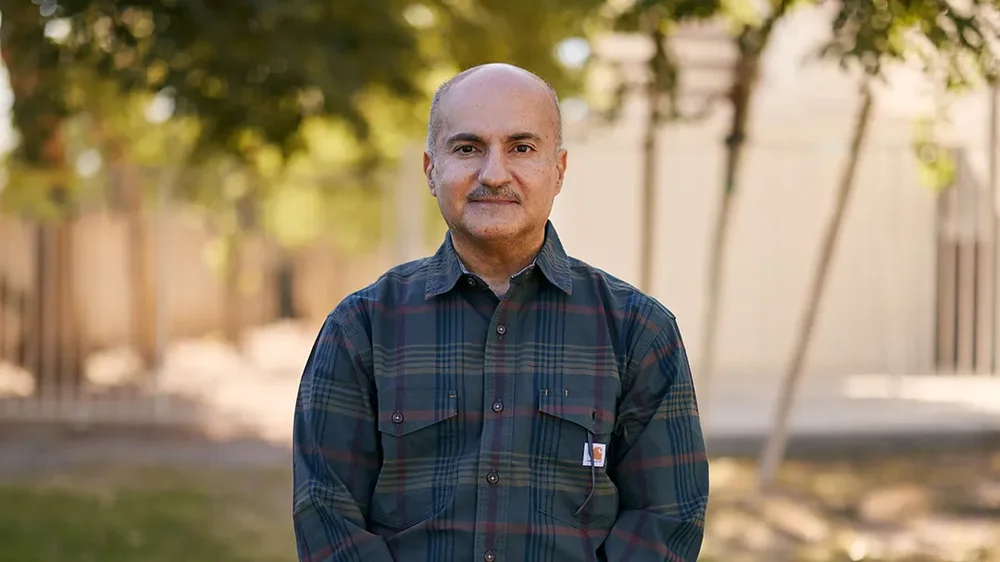
As a militant Muslim, I never expected to have any dealings with Christians, much less to befriend them. - Al Fadi I was born and raised in Saudi Arabia as part of a devout Muslim family. Growing up, I considered myself a devoted follower of Islam, one who applied its teachings to every aspect of his life. I believed that Islam was the only true religion and that those who didn’t accept Allah as their God and Muhammad as his messenger were doomed to hell. I had nothing but contempt for Christianity. I believed that Muslims were superior to all others, that all non-Muslims were infidels, and that Jesus was a prophet sent by Allah, not the divine Son of God. As far as I was concerned, he had never been crucified, never died on a cross, and never been resurrected. I believed he had ascended into heaven, but only to be saved from his persecutors before coming back at the end of times to restore Islam as the true religion of Allah. All in all, I grew up harboring intense hatred for Christians, Jews, and all who refused Islam. By age 12, I had memorized half of the Qur’an, and my goal was to memorize all of it—all 114 chapters, all 6,236 verses. At age 15, I was prepared to die on behalf of Allah, like so many young people who were journeying to Afghanistan to fight the Soviet Union alongside Osama bin Laden. (He was a hero to us at that time.) Were it not for my mother, who pleaded with me to stay behind, I would have joined this “holy war.” I believed that the rewards awaiting Muslims who died in the name of Allah were greater than any other a Muslim could receive. I was certain that by sacrificing my life in this manner, I would make it to paradise with all my sins forgiven. Interacting with ChristiansThe more I grew up, however, the more notes of doubt began to creep in. As I gained a greater familiarity with the language of the Qur’an, I started seeing messages of hate within it, messages I could not understand and did not like at all. How, I wondered, could God hate his own creation simply because they do not accept him? On some level, I thought God should be above that kind of petty vindictiveness. But sharing such thoughts and doubts with others would have caused me lots of trouble and likely jeopardized my safety, as the penalty for blaspheming Allah and leaving Islam was death. After finishing college in Saudi Arabia, I went to the United States to pursue my graduate education in engineering. But I had a dilemma. Islam teaches its followers not to befriend Christians, and in the Muslim world people truly believe that the United States is a Christian nation—in other words, that everyone born in America is born a Christian. (The category of born-again Christian, as a measure of genuine faith, was unfamiliar to me.) In the summer of 1989, I arrived in the United States filled with fear and discomfort. In order to receive the best education, I knew it was imperative to attend an American university. But I was apprehensive because that meant having to interact with Christians. After living in a dormitory for about a month, I began feeling the need to become more familiar with American culture and to sharpen my English language skills. Around that time, I heard of something called the International Friendship Program, which paired students like me with local volunteers who would provide help and hospitality. I signed up for the program, not knowing it was a Christian ministry. Almost two weeks later, a young couple from the program contacted me and indicated that they were the family assigned to work with me. And for the next seven months, this family showed me love that far exceeded my expectations, love of the sort I had never experienced among my fellow Muslims. In November, this family invited me to their home for Thanksgiving dinner. Only then did I realize this was a Christian family, because they asked if they could pray before the meal. I admit that my heart sank at this moment. I had never realized that Christians are actually filled with love and not hate, as my Muslim upbringing had led me to believe. This family had never shared the gospel with me, but they had shown me what the gospel looks like. And on that day, I walked out of their home with great doubts about my faith and its teachings. I vowed that I would do research on Christianity, hoping to learn more about how Jesus could make such a profound difference in someone’s life, offering the kind of peace and joy I had never seen before. Seeing the lightA few years later, after earning my master’s degree, I joined a local engineering firm. There I met another born-again Christian. I was impressed by his faith—his joy, his peace, and the light that seemed to shine forth from him. And when he invited me to his home for Christmas dinner, I noticed that his wife and kids had the same qualities. They were just like the family I had met in college. At this point, I couldn’t hold back my curiosity any longer. I asked him why he was so different from those around him. He told me he was a born-again Christian, and he shared his testimony. Once again, I was gripped with the desire to know more about Jesus. From that moment forward, God allowed me to go through numerous trials and adverse circumstances in my life, all of which increased my interest in Christianity. And in May 2001, going against everything my Muslim faith had taught me, I made my first visit to a Christian church. Over the course of the next six months, as the church studied the Gospel of John, I learned who Christ truly is. In November 2001, without a shadow of a doubt, I accepted Christ as my Lord and Savior. But it wasn’t easy at first. Within a matter of months, I lost my marriage due to unfaithfulness from my spouse, and I also lost my job. It felt like Satan was actively trying to destroy my faith. But these months taught me invaluable lessons about having a personal relationship with Jesus and learning to depend on him through all circumstances. During this time, God revealed his awesome glory to me in ways I could not deny or doubt. Since then, my life has changed forever, and I am no longer the man I used to be. Today I lead a global ministry called CIRA International, which I founded by God’s grace in 2010. Our mission is to reach Muslims for Christ, to equip believers with practical tools for effectively sharing the gospel with Muslims, and to disciple new believers, especially those coming from Muslim backgrounds. In addition, I teach classes and seminars on Islam at various churches, so that my brothers and sisters in Christ can learn how to better witness to their Muslim neighbors. And at my home church, I head up a newly established chapter of the International Friendship Program, the very ministry that planted the first seeds of gospel hope in my heart almost 16 years ago. I came to know my beloved Jesus through simple acts of love. And I pray God will use my own simple acts of love to bring glory to himself by drawing others to a saving faith in him. Al Fadi teaches courses in biblical theology, business, and comparative religion at Arizona Christian University.
-
Santeria (translated as “the way of the saints”) is a religion that began in West Africa and the Caribbean. The basis of Santeria lies in a merging of Yoruba beliefs and practices with elements from Roman Catholic traditions. Santeria emerged as African slaves were brought west and their belief system was made illegal by the colonialists who enslaved them. Forming Santeria was the slaves’ way of reconciling their now-criminalized belief system with the religion they were forced to embrace. Santeria is also recognized under the names of La Religion, Regla de Ocha, La Regla Lucumi, Lukumi, and the Rule of Osha. Santeria does not follow a central creed, code, or book, but it is founded on rituals and ceremonies that have been passed down by oral traditions. Religious practices take place in a temple known as a casa de santos (“house of the saints”). Besides providing space for worship, these temples are usually inhabited by priests or priestesses. Members of the Santeria religion worship orishas, which are powerful but mortal spirits associated with Catholic saints. Orishas are dependent on humans, requiring their worship in order to survive. Followers of Santeria strive for a mutually beneficial relationship with orishas. They believe that if they worship the departed spirits and perform the right rituals, these spirits will thrive, providing energy and help to achieve the destiny of the living. Worship in Santeria includes dancing to rhythmic drums; the use of charms, herbs, symbols, and potions; and initiation rituals. Occasionally, animal sacrifice, usually of chickens, is employed to gain favor with the orishas and to bring good fortune and forgiveness of sin. The religious leaders, Santeros (male) and Santeras (female), serve as earthly representatives or extensions of orishas. These men and women train for many years to gain their status in the faith as they learn the dances, songs, divination, and healing methods of Santeria. It is a challenge to try to determine how many people practice the Santeria religion because there is no central organization that keeps track of membership. It is mostly a closed, private religion. A person must be initiated into Santeria in order to gain more information. However, some estimate as many as one hundred million Santeria followers around the world. The Santeria religion is a cult that Christians would be wise to avoid. Santeria followers believe in none of the fundamental biblical truths of the Christian faith. They rely on rituals and animal sacrifices to gain favor and help from their spirits, rather than on the sacrifice of Christ and the saving grace of the One True God. If you know someone who is practicing Santeria, the most powerful thing you can do is pray for him or her. Then, when given an opportunity, relay the message of salvation through Jesus (Romans 10:9–10). Finally, live your life in a God-honoring way so that all can see how you are different because of Christ (1 Peter 3:15). Trust that the Holy Spirit will do the work of drawing, convincing, and converting the heart. Original Post: https://www.gotquestions.org/Santeria.html
-
Great confusion exists on the subject of homosexuality. Certain groups and individuals have vigorously fought to change traditional thinking. They have waged a multi-pronged attack in legal, social, political, and scientific arenas to advance arguments for their agenda. In the religious realm, confusion reigns because church leaders and scholars have rejected the Scriptures. Paul wrote in his epistle to the Romans of such individuals that “their foolish heart was darkened” and “they exchanged the truth of God for a lie.” The Biblical view of homosexuality is consistent and clear. This study will examine what God has revealed about it. Jesus and Homosexuality Perhaps the best place to start to examine Jesus’ teaching on the subject. His statements on human sexuality should end any debate. Those who promote homosexuality as acceptable and natural have sought to strengthen their arguments and mislead the public by stating that Jesus never spoke about homosexuality. They are mistaken. Jesus leveled the most devastating argument possible against homosexuality. Matthew 19.3-6 and Mark 10.2-9 record Jesus’ statements on human sexuality. Matthew recorded: Mark recorded: The focus of the Pharisees’ question centered upon divorce–a subject as debated then as now. How Jesus answered their question is most informative. What was the context of this discussion? Were the Pharisees seeking truth and understanding? The passages above indicate they were not. They did not approach Jesus with a desire to learn how to address the problems of difficult marriages and divorce. On the contrary, the Scriptures reveal their questions were to “test” him. They wished to discredit and condemn him. Jesus understood their goal and answered in a way to silence them. He quoted portions of two passages found in Genesis 1 and 2. These passages are the bedrock of human sexuality. In the first passage, we learn God created Man, i.e., mankind, in His own image. This image was composed of male and female. The next passage enlarges on Man’s creation. From it we learn how God created woman. He built (בָּנָה “banah”) her out of the “rib” (צֵלָע–better translated, “side” or “side chamber”) of man. This creative act reestablished the “unity” of “Man” as male and female “in Adam” into two individual beings, male and female. The Bible expresses this wonder as “a man will leave his father and mother, cleave to his wife, and they will become one flesh. Hence, through marriage and sexual union, what began as a unity “in Adam” (man and woman) continues as a unity “one flesh” in two distinct individuals. Jesus affirmed the image of God as man and woman with his quotation of Genesis. Alternative alignments of man/man, woman/woman reject God’s creation and deface the image of God. No greater rebellion can be waged against the Creator than to reject his highest creation–the creation of Mankind created in the image of God. Jesus told the Pharisees, “what therefore God has joined together, let no man separate”. This is precisely what those who argue for homosexuality wish to destroy. They desire to redefine the singularity of God’s image into their own image. Therefore, while not mentioning the word “homosexuality,” Jesus made it clear that only man and woman constituted a legitimate union. Jesus’ words on the man and woman relationship as the image of God should silence all argument for alternate sexual unions and partnerships. Those who contend for a different relationship face Jesus Himself as their chief opponent. This should concentrate the minds of all but the most spiritually darkened and hardened rebels against God. In addition to Jesus’ strong statements above, he upheld the inerrancy of the Hebrew text. He declared, Jesus’ declaration that it is easier for the universe to cease to exist than for the Scriptures to fail is at first glance shocking. But upon reflection, Jesus’ statement reveals the simple fact that the faithfulness of God, indeed the character of God, is more secure than the existence of the universe. When Jesus spoke of the “Law” He used it as a metonymy for the entire body of Scripture. According to Jesus, all that had been written, from Genesis to Malachi, was inerrant. With Jesus’ validating imprimatur of the Scriptures, it is instructive to consider what they declare regarding homosexuality. Sodom and Gomorrah Genesis 18-19 records how God delivered Lot from the city of Sodom which he afterwards destroyed. According to Genesis 13.13, “Now the men of Sodom were wicked exceedingly and sinners against the LORD.” Genesis 18.20 states, “And the LORD said, ‘The outcry of Sodom and Gomorrah is indeed great, and their sin is exceedingly grave.'” One of the sins of Sodom was homosexuality. The account in Genesis reads: The translation, “have relations” is the Hebrew word יָדַע and means “to know”. It is used of intellectual, experiential, and sexual knowledge. Clearly, what is in view in this passage is sexual knowledge, cf. Genesis 4.1, “Now the man had relations (or “knew,” (יָדַע) with his wife Eve, and she conceived and gave birth to Cain, and she said, “I have gotten a manchild with the help of the LORD.” The context of Genesis 19 reveals that the men of Sodom wished to have homosexual relations with the two “men”2, who had come to deliver Lot from the immorality of the city and its impending destruction. Lot begged the men of Sodom (Genesis 19.7) not to act “wickedly” (רָעַע). This word is always used of evil activity. Lot continued to appeal to the men of Sodom: These verses expand insight into the horror of this unnatural union to Lot’s mind. Rather than have the men of Sodom violate the two “men”, i.e., angels, under his care, Lot offered them his virgin daughters. This dreadful offer should give any reader pause. What father would choose his daughters to be gang raped? There is only one logical answer: only a father so stressed at the thought of sex against the two angels that he regarded such a choice a lesser evil. Lest we think that Lot’s judgment on this matter unique we will examine another account in the Scriptures with a similar plot in Judges 19. While the sin of Sodom involved more than homosexuality, (cf. Ezekiel 16.49-50) homosexuality was an overt indicator of its immorality. Its citizens not only practiced it, but were shameless about it (cf. Isaiah 3.9; Romans 1.32). Throughout the Scriptures, Sodom and Gomorrah are held as examples of gross immorality. The Jewish prophets frequently referred to these cities as standards of evil when they identified their own nation’s sin. Jesus referred to these cities in his preaching of repentance to Israel (cf. Matthew 10.15; 11.23-24; Luke 10.11; 17.29). Some have maintained the sin of Sodom and Gomorrah was not homosexuality but “abusive homosexuality”. The problem with this interpretation is that the Scriptures make no such a distinction. Homosexuality is abusive by definition for it profanes the image of God. Others maintain the sin of the men of Sodom was inhospitality. Such a suggestion has no Scriptural support and is not serious Biblical scholarship. God destroyed both Sodom and Gomorrah (the two major cities) as well as the cities of Admah and Zeboiim. The entire valley was morally corrupt. Jude commented of the destruction: The translation “strange flesh” is the expression σαρκὸς ἑτέρας. The Greek language has two words that mean “other” or “another”, ἄλλος and ἑτέρας. The word ἄλλος denotes another of the same sort while ἑτέρας denotes another of a different sort. For example, Jesus promised to send another ἄλλος Comforter (John 14.16), i.e., another like Himself. Paul warned the Galatians against another ἑτέρας gospel, i.e. a gospel different in content than that which he preached–“another” (ἑτέρας) gospel which is not “another” (ἄλλος), Galatians 1.6-7. So, Jude, by using the word ἑτέρας meant flesh of a different kind. Jude’s statement “went after strange flesh” is intriguing. What does he mean by “strange flesh?” On the surface, it might appear that “strange flesh” is Jude’s way of referring to homosexual relations. But Jude seems to mean more than this since he brings up the matter of “angels who did not keep their own domain”. Who were these angels? The most likely explanation is that they are the beings found in Genesis 6. There we find an account of “sons of God” (בְּנֵי הָֽאֱלֹהִים) who had sexual relations with women. These women produced mighty offspring, the Nephilim. The expression, “sons of God” has been debated by scholars. But the interpretation is not difficult. The phrase בְּנֵי הָֽאֱלֹהִים is always used in the Scriptures of angels–never men (cf. Job 1.6; 2.1; 38.7). Therefore, the lexical evidence supports בְּנֵי הָֽאֱלֹהִים being angels. As strange as sexual activity between fallen angels and humans may have been, the Bible declares such unions occurred–and may happen again (Matthew 24.37). From these unions arose the Nephilim (Genesis 6.4; Numbers 13.33). These beings are the source of the stories of “gods” and “demi-gods” of pagan mythology. God destroyed these beings in the Flood. But even after the Flood this kind of sexual activity occurred resulting in giants such as Goliath, cf. Genesis 6.4; 1 Samuel 17.4-23; 21.9; 22.10; 2 Samuel 21.19; 1 Chronicles 20.4-8). Such demi-gods as Goliath were of the tribes of the Rephaim, Emim, Anakim (Deuteronomy 2.10-11) and the Zamzummim (Deuteronomy 2:20) which occupied the ancient near east. It was because of this genetic corruption of the human race that God commanded Israel to completely destroy them. Jude’s statement seems to indicate that the men of Sodom knew the visitors were angels. The Genesis text does not reveal this, however. In any case, the angels were in the form of men and sex with them would have been a homosexual act. Lot’s response revealed he regarded the demand of the men of Sodom as evil. Idolatry and Immorality The Holiness Code of Leviticus 18 and 20 gives God’s instruction of how Israel was to deal with homosexual activity. Leviticus 18.22 stated, Leviticus 20.13 stated, Some have argued that the word “abomination” (תּוֹעֵבָה) refers to ritual uncleanness. But the only passages with an element of ritual uncleanness are Leviticus 18.19 and 20.18 which involve menstrual impurity. No serious Biblical scholarship accepts that these two verses govern the two chapters. The plain reading of the text is that what is in view is moral purity not ritual cleanliness. To maintain a “ritual uncleanness” view is like arguing murder is on the same moral level as a faux pas of using the wrong dinner fork. Both Leviticus 18 and 20 enumerate rules of moral behavioral for the new Jewish national entity. They were not to follow the practices of the Egyptians. God’s moral rules defined and prohibited incest, adultery, homosexuality, bestiality, spiritism, and child sacrifice. The conclusion of both chapters is, “Thus you are to be holy to Me, for I the LORD am holy; and I have set you apart from the peoples to be Mine” (Leviticus 20.26). Such as statement demolishes any argument of ritual purity. Some maintain the issue at stake in these chapters is idolatry, not homosexuality. But one does not exclude the other. Idolatry was always associated with aberrant sexuality. An examination of idolatry in the Hebrew Scriptures (e.g. Ezekiel 16.20-50; Leviticus 20.1-5; Deuteronomy 12.28-32) reveals the gross immorality in the practice of idolatry. This fact is further revealed in secular literature and by archaeology. Paul expounded on the issue in Romans 1 when he argued that rejection of the true God results in idolatry resulting in moral degradation. False religion and false sexuality are partners. Idolatry is the worship of false gods, that is to say, the worship of any other God than the God of the Bible. The word “idolatry” comes from two Greek words, εἶδον, the aorist form of the verb ὁράω “to see” and λατρεία which means “service”. The Septuagint (LXX) used λατρεία exclusively for divine service. Therefore, idolatry means to render divine service to that which is visible. The God of the Bible is invisible and beyond sensory perception in his essential nature. This is the reason why God ordered the Jews not to make idols or representations of God. Pagan cults almost by definition had idols and were rife with sexual immorality–both heterosexual and homosexual. Preachers rarely expound on idolatry and its associated phallic cult. Therefore most churchgoers are ignorant about what transpired in ritual idolatry. But such practices are well-known to historians and archaeologists who have studied the ancient near east, ancient Greece, ancient Rome, and all the ancient world. Every culture that engaged in idolatry engaged in aberrant and licentious sexual behavior that violated the sexual pattern God set forth in Genesis and in the Mosaic Law. Idolatry in ancient cultures included human sacrifice, demonism, homosexuality, lesbianism, bestiality, and incest. Sexual promiscuity was endemic in the phallic cults and pagan “worship” involved priests and priestesses sexually acting out the roles of the fertility gods. Debasement of the Concubine Few stories are more sordid than the one recorded in Judges 19. It is as shameful a tale of immorality and debasement as one can imagine. The story involves a Levite who went to restore his concubine3 who had committed adultery against him. He traveled to her father’s house where he spent several nights as his guest. Eventually he and his concubine left and arrived at a town opposite Jerusalem. Unable to find a place to stay for the night, he was resigned that they would have to stay in the open square of the town. However, an old man came in from working in the fields to his rescue. He told him that he and his concubine were not to stay in the public square. They could spend the night with him. The Levite accepted the hospitality of his host and went to his house. At this point, the story assumes characteristics similar to the account of Lot in Genesis 18-19. Certain men of the city, aware a stranger had arrived in town, began to pound on the old man’s door. They demanded, “Bring out the man who came into your house that we may have relations with him” (Judges 19.22). The word for “sexual relations” is the Hebrew יָדַע as noted above. Judges recounts: “Then the man, the owner of the house, went out to them and said to them, ‘No, my fellows, please do not act so wickedly; since this man has come into my house, do not commit this act of folly” (Judges 19.23). The word for “wickedly” is the Hebrew word רָעַע seen in Genesis 19. The phrase “act of folly” is the Hebrew נְבָלָה. The translation “folly” is insipid to modern ears. It conveys the sense of “silly” and connotes the trivial. But נְבָלָה carries the same sense as the word נָבָל. Both words mean “fool” or “foolish” but not in the sense of “silly” or “trivial.” They mean one who is insensible to God and to right and wrong. Moses called his generation “foolish” (Deuteronomy 32.1-6) because they were insensible to God and His goodness. The “fool” of Scripture is one who cannot think correctly for he denies God’s existence (Psalm 14.1). Premeditated rape is נְבָלָה and is translated “disgraceful thing” in Genesis 34.7. Each of these occurrences contains no trace of triviality but denotes a perverse insensitivity to what is good and right. In response to the demand of the men, the old man, like Lot, who offered his virgin daughters for the men of Sodom to rape, offered his own daughter and the Levite’s concubine to the men. Both Lot and the old man faced the choice of relative evil. Either choice was נְבָלָה. But both Lot and the old man determined the rape of their daughters was a lesser evil than homosexual intercourse. The story has a horrible outcome. The men of the city seized the Levite’s concubine and “raped and abused” her all night long (v. 25). She died from the abuse. The Levite put her on his donkey. When he got home he cut her up into twelve pieces and sent a piece to each tribe of Israel. Judges 19 ends, “And it came about that all who saw it said, ‘Nothing like this has ever happened or been seen from the day when the sons of Israel came up from the land of Egypt to this day. Consider it, take counsel and speak up!'” This passage of Scripture graphically illustrates how far the nation had fallen into sin. The accounts in Genesis 19 and Judges 19 are parallel. Both Lot and the old man judged rape of the women to be a lesser sin than rape of the men. We would do well to heed the closing works of the chapter, “Consider it, take counsel and speak up!” The Record in 1 Kings Israel’s history under its kings is recorded in Kings and Chronicles. After Solomon, the nation divided and the north was “Israel” (ten tribes) and the south was “Judah” (two tribes). Judah had better kings and was more faithful to YHVH but eventually they too fell away from God. In each of the three passages below we find idolatry and cultic sexual immorality in the reigns of Jeroboam (Israel)/Rehoboam (Judah) through Ahab (Israel)/Jehosophat (Judah): The translation, “male cult prostitutes” and “sodomites” (קָדֵשׁ) in the passages above were men who engaged in homosexual sex as part of the cultic worship of false gods (idols). This Hebrew word comes from the root קדש which has the meaning of being set apart or consecrated, i.e. “holy.” In context, it means idolaters were set apart or consecrated to evil. Israel’s priests, on the other hand, were set apart to YHVH. See also the passage, Deuteronomy 23.17, which forbade Israel’s men and women to be involved in cult-prostitution. Such cult prostitutes engaged in both heterosexual and homosexual acts. This is well-know from ancient near eastern studies as well as from the Biblical text itself. Tragically, in the above occurrences, the godly meaning of “holy” had been turned into the false and immoral. If one is able to learn only one thing from the study about God in the Jewish Scriptures it is that the God of the Bible, YHVH, is fundamentally different from the gods of the ancient near east. He is ethically and morally perfect, i.e., “holy” and has no commerce with sin. God went to great lengths to teach Israel about His character through the Law of Moses, the Levitical priesthood, and the ceremonies necessary to worship and serve Him. These passages provides us with the knowledge of the long history of homosexuality in false religion. Male and female prostitutes occupied a key role in ancient near east pagan religion. Paul wrote that the Jewish Scriptures were written for our instruction (Romans 15.4; 1 Corinthians 10.11). To the degree homosexuality is accepted into a society reveals the spiritual health of that society. Those involved in it are indicators of deceit and false religion. They serve as modern equivalents of cultic prostitution. Paul’s Indictment of Mankind In Romans, Paul provided the Biblical analysis of the problem of the world. His analysis is a devastating indictment of mankind. Paul argued that man consciously rejects God and exchanges good for perversion and evil. What is God’s response to man’s rebellion? God allows man the freedom to practice evil. He “gives man over” to perversion. Paul’s indictment begins in Romans 1.18-21: When man suppresses the Scriptures, i.e., truth, the result is futile speculation and hearts of darkness. Like nature, supernature also abhors a vacuum. Truth is replaced by falsehood. The first consequence of mankind’s rejection of God is given in verses 22-23: In verses 24-25 Paul described the second consequence of man’s rebellion: Lastly, Paul wrote of the third consequence of man’s dark heart in verses 26-27: Paul’s argument pivots upon the words translated “changed” or “exchanged” and “abandoned” found in verses 23, 25, 26, and 27. In verse 23 Paul used the word ἀλλάσσω and in verses 25 and 26 the word μεταλλάσσω. The word ἀλλάσσω is used elsewhere in the New Testament five other times: Acts 6.14; 1 Corinthians 15.51-52; Galatians 4.20, and Hebrews 1.12) while μεταλλάσσω is used only in Romans 1.25-26. Why did Paul change vocabulary? In verse 23, the subject is God and the “change” is from God’s glory to idols while in verses 23-26 the subject is man. This change coincides with what we have seen earlier: idolatry (worship of anything but the God of the Bible) leads to sexual perversion. Thus, in verse 24 we have Paul’s statement: “Therefore God gave them over in the lusts of their hearts to impurity, that their bodies might be dishonored among them”. In verse 27, Paul also used the word ἀφίημι. This word carries the sense of “leave”, “abandon”, “send away” or “give up”. It seems to convey an even stronger sense of will in rejecting what is good for what is evil or perverse. As a result of man’s determination to do evil, God allows it to run its course. The response of God to man’s rejection of Himself and the truth is expressed in Paul’s words: “God gave them over” (παραδίδωμι) in verses 24, 26, 28. Augustine wrote the punishment of sin is sin. He had a point. No controversy should exist about the meaning of these verses. The passage is straightforward. It teaches homosexuality is contrary to nature, a rejection of God, and a rebellion against God’s sexual design of the human race. The only reason it is controversial comes from the rejection of the Scriptures–spiritual darkness. Paul’s Instructions to the Corinthians Corinth was a major metropolitan city of great commercial wealth. It had been such for generations and continued to be so in Paul’s day. Paul wrote the Corinthians to correct them on factions which had divided the members of the church and to address sexual immorality. He encouraged them to holy living. Paul’s attitude towards homosexuality is consistent with the rest of the Scriptures. Paul wrote the Corinthians, Two words in the above passage refer to homosexuality. The first, translated “effeminate” is the word μαλακός. Literally, the word means “soft” or “soft to the touch” (cf. Matthew 11.8). Metaphorically, it is used of catamites, of men and boys who allow themselves to be misused sexually with men. The second word, translated “homosexuals,” is ἀρσενοκοίτης. This was a male homosexual or a pederast. Paul used these two words to refer to the two types of behavior in homosexual acts. The first word μαλακός referred to the passive behavior and the second ἀρσενοκοίτης to the active role in the homosexuality act. Both actions are sin which will have no place in the kingdom of God. Scientific research indicates that both genetic and environmental factors contribute to homosexuality. Some seem to be born genetically predisposed towards attraction to the same sex and environmental factors such as confused family roles from smothering or over-dominant mothers, absent or disinterested fathers, and physical or sexual abuse contribute towards this predisposition. While these all may be contributing factors, Paul made it clear in Romans 1 that homosexuality ultimately is no different from any sin. It is rooted in rebellion against God and against conscience. Some maintain homosexuality is genetic, i.e. homosexuals are “born that way.” This is true. All are born into sin. David wrote in his great confessional psalm, “Behold, I was brought forth in iniquity, and in sin my mother conceived me” (Psalm 51.5). David did not mean his mother was guilty of committing an immoral act in his conception. He was acknowledging he entered the world a sinner. Each of us has a genetic predisposition with certain strengths and weaknesses. For some, homosexuality is an area of weakness. For others it is fornication, stealing, lying, greed, murder, etc. Each person has a will and chooses to do the things he does. If a man is brought before the court for stealing and his defense is, “I couldn’t help it. I was born this way” what does the judge say? Guilty. Five years. The Scriptures teach homosexuality is an aberration, an act of rebellion against God, like all sin. The good news is, like other sinful behavior, the Lord can change us. Continuing the verses above, Paul wrote the Corinthians, Some of the Corinthians had been homosexuals. We must not minimize Paul’s statement. Corinth was one of the most immoral cities in the ancient world. It was a “sailor” town. Greek culture was rife with homosexuality and Paul was not naive about sexual practices. He was thoroughly familiar with the immoral activities of pagan cities. But Paul declared God had transformed them. This is the hope for all of us. Each of us who believes Paul’s gospel (1 Corinthians 15.1-4) comes to the Lord with lives of sin. But as the wonderful verse above says, we have been washed, sanctified, and justified. Thanks be to God! Paul’s Instruction to Timothy Paul wrote Timothy, The word “homosexuals” in the above passage is ἀρσενοκοίτης, examined above. It is important to note that these two passages have the same message, one to the Corinthians and one to Timothy. Conclusion Ahab, King of Israel, sent his messenger to find Micaiah the prophet on the advice of Jehosophat, King of Judah. Micaiah stood in opposition to the religious establishment of the four hundred prophets who served Ahab. In questioning them about whether he would be successful in war against Ramoth-gilead, Ahab’s prophets responded, “Go up, for the Lord will give it into the hand of the king” (v.6). When Micaiah spoke the word of the Lord to Ahab he told him he would die and lose the battle. Ahab chose to listen to his prophets. He thought he could disguise himself in the battle and be safe. He was wrong. He died. Some things never change. Micaiah courageously stood before Ahab over 2,800 years ago and told him the truth. His example challenges us today. What are Christians to do on the matter of homosexuality? Many church leaders, like Ahab’s prophets, declare nothing is wrong with it. They maintain the Bible is wrong or is misread about homosexuality, that it is not “the word of the Lord”. This is an old, tiresome line. The first lie came from Satan who enticed the woman with “Hath God said?” (Genesis 3.1) The great question and the great challenge to Christians in a fallen world is whether to be faithful to God and His Word or not. How do we do that? We do it by believing what God says, by communicating the truth, and by challenging and encouraging others to believe and be faithful also. Ahab’s prophets claimed to speak the word of the Lord. They were the majority. They were the establishment. They had the power. They were wrong. Ahab lost the battle and died. The Scriptures teach consistently and unambiguously that homosexuality is sin. Those who promote and tolerate reject the Scriptures, profane the image of God, and rebel against God. None of us is without sin. But the glorious good news is that Christ has paid for our sins. He died on the cross and rose from the dead. He loves all sinners. He has redeemed us from the law of sin and death. As Christians, what is our message to those in the bondage and slavery of homosexuality? First, it is to believe the gospel (1 Corinthians 15.1-4). Second, it is to allow God to transform us into the image of Christ (Romans 12.1-2, Romans 8.28-29). The only way we can be “ourselves” is by being His. Paul wrote that all who believe his gospel have been changed fundamentally. We have become new creatures. Our message to mankind and those bound in homosexuality is the message of the great apostle: 1 The Scriptures state Jesus is the Creator of all things (cf. John 1.3; Colossians 1.16; Hebrews 1.2; Ephesians 3.9; 1 Corinthians 8.6. Therefore, Jesus’ response to the Pharisees was a reference to His own activity. 2 Angels, when they appear as humans, always appear in the form of men. 3 A concubine was a slave and a wife of secondary rank. She was usually acquired as payment of a family debt, purchased from a poor family, or taken as a captive in war. Succession and inheritance went through concubines as with wives. Resources consulted for this study are the following: G. Abbott-Smith, A Manual Greek Lexicon of the New Testament, T. & T. Clark, 1977. William F. Arndt and F. Wilbur Gingrich, A Greek-English Lexicon of the New Testament and Other Early Christian Literature, University of Chicago Press, 1957. Geoffrey W. Bromiley, The International Standard Bible Encyclopedia, revised edition, William B. Eerdmans Publishing Company, 1979-1988. Francis Brown, S. R. Driver, and Charles A. Briggs, A Hebrew and English Lexicon of the Old Testament with an Appendix Containing the Biblical Aramaic, Clarendon Press, 1979. R. Laird Harris, Gleason L. Archer, Bruce K. Waltke, Theological Wordbook of the Old Testament, Moody Press, 1980. James Hope Moulton and George Milligan, The Vocabulary of the Greek Testament Illustrated from the Papyri and Other Non-Literary Sources, William. B. Eerdmans Publishing Company, 1980. W. E. Vine, An Expository Dictionary of New Testament Words with their Precise Meanings for English Readers, Fleming H. Revell Co. 1966. ©2004 Don Samdahl. Anyone is free to reproduce this material and distribute it, but it may not be sold.
-
What might have compelled Matthew to place the Lord's Prayer at the center of the center of the center of Jesus' Sermon on the Mount? Why does Jesus instruct his followers to address God as “our Father” when praying? Why would we pray for God’s name to be recognized as holy? How does the story of the Bible provide background to this request? What is Jesus trying to form within his followers when he teaches them to pray, “may your Kingdom come, and may your will be done, as it is in the skies so also on the land?” What story from the Old Testament is Jesus referencing when he prays, “give us today our daily bread?” Why might this connection be significant? What’s the relationship between receiving God’s forgiveness and extending forgiveness to others? In the biblical story, what is God's purpose for testing people? How is a test different from a trap?
-
The beginning of this video frames the story of the Bible as a choice between two paths—one leading to life and the other to death. How does this reframe impact your understanding of the Bible? According to Jesus, why does the path leading to life often feel narrow or constricting? Jesus says that we can identify illegitimate prophets by their fruit. What are some examples of bad fruit produced by a leader? What are examples of good fruit? How is it that people can do things in Jesus’ name but not actually be known by him? Why does Jesus compare our choices and lifestyle with building a house? How does this connect to the concept of Israel’s temple as “the house of God”? Jesus says that the wise person who builds on the rock hears his words “and does them.” Why is it important to trust in Jesus and to follow his way of life? How can following the teachings of Jesus in the Sermon on the Mount prepare us for the storms of life? Consider a few examples, such as financial hardship, persecution, or unexpected tragedy.
-
In this section of teaching, what kind of trap is Jesus warning his followers about? When we feel the desire to judge others, what two things does Jesus encourage us to do instead? (See Matthew 7:1-5.) Jesus advises people not to cast “pearls in front of pigs.” How would you describe the wisdom he’s communicating through that metaphor? Matthew 7:7-8 is sometimes used to support the idea that God gives people anything and everything they ask for. But in the larger context of Matthew 7:1-2, how might we interpret his words? In Matthew 5:17 and Matthew 7:12, notice the repeated phrase “the Torah and the Prophets.” What might these two bookend verses tell us about Jesus’ message in this section? Reflect on any other themes or topics that came up after watching the video. Jesus’ Golden Rule is a simple yet challenging way to live. What kinds of situations would make it most difficult to follow Jesus’ instruction?
-
What are some of the false promises we’re prone to believe about possessions and wealth? In Matthew 6:19, what is Jesus trying to communicate about earthly possessions? According to Jesus, what are some examples of sky stuff (or heavenly treasure)? According to Matthew 6:22-23, how can our perception of wealth shape us? How can wealth or possessions be like tyrants? In Matthew 6:25-34, how does Jesus’ appeal to the birds of the sky and flowers of the field invite us to shift our perspective about worry and possessions?
-
Why does Jesus tell his followers to address God as “our Father”? Why would someone pray for God’s name to be recognized as holy? When Jesus prays, "Your Kingdom come, and your will be done," what is he asking for? What does praying “give us today our daily bread” remind us about in the Old Testament, and what might it instill within us? Why does Jesus so closely connect God’s forgiveness of us to our forgiveness of others? Jesus prays about temptation, or “testing,” and then prays about deliverance from the evil one. How do these concepts or ideas relate?
-
In Jesus’ day, what did it mean to be a hypocrite? How is this the same or different from what a hypocrite is today? Why does Jesus encourage private generosity? Whether we pray alone or with other people, what is the wisdom principle that Jesus is advocating for in his teaching about prayer? According to the video, what is the ultimate treasure for a human? And when humans receive this treasure, what is their response? Spend some time reflecting on any other themes from the video that stood out to you.